组织工程_2.Growth and differentiation
- Cells
- basic
- Cells are the basic building blocks of living organisms, around 20 micrometer in diameter
- they can survive in isolation only under carefully controlled conditions
- Most cells will not grow well in suspension, and so they are usually grown attached to a substrate
- 组成
- 细胞核,细胞质,细胞器,细胞膜
- All eukaryotic cells contain a nucleus, in which is located the genetic material that ultimately controls everything the cell is composed of and all the activities it carries out.
- Nucleus is surrounded by cytoplasm, which has a very complex structure and contain substructures called organelles that are devoted to specific biochemical functions.
- The outer surface of the cell is the plasma membrane, which is of crucial importance as the frontier across which all materials must pass on their way in or out.
- Cell cycles
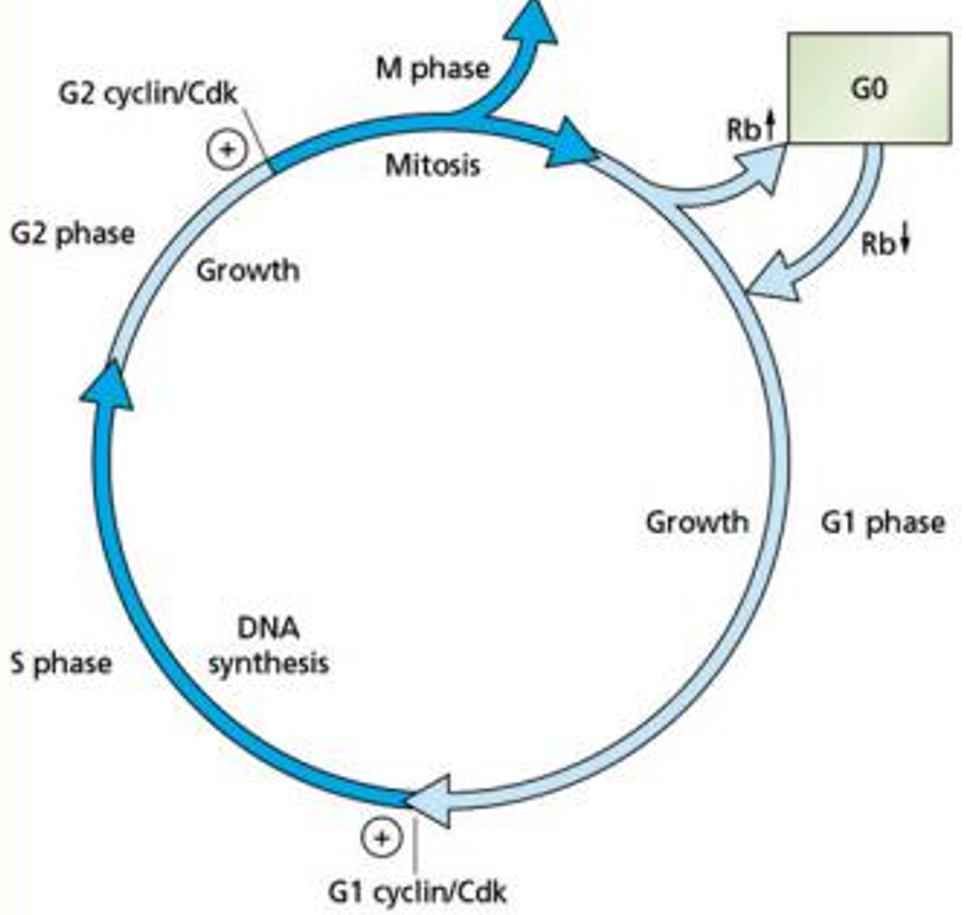
- The cell cycle is conventionally described as consisting of four phases.
- M indicates the phase of mitosis有丝分裂, S indicates the phase of DNA replication, and G1 and G2 are the intervening phases.
- In the mature organism most cells are quiescent静止的, a state call G0.
- growth factors induces the resumption of the cycle, starting from the G1 checkpoint.
- Serum starvation 血清饥饿 is used to synchronize 同步 the cell cycle within the same batch of cells
- The cell cycle is conventionally described as consisting of four phases.
- Cell types
- More than 200 mammalian哺乳动物 cell types identified so far, should be far more
- Cells are different from one another because they are expressing different subsets子集 of genes and hence contain different proteins.
- for example, the proteins of the contractile apparatus of skeletal muscle are very abundant.
- However, a typical cell will express many thousands of genes, and its character will also depend on the genes that are not expressed
- basic
- Growth
- Cell division
- Cells often have the capability for exponential growth指数增长 in tissue culture, but this is very rarely found in animals.
- general tendency for differentiation to be accompanied by a slowdown or cessation停止 of division.
- In postembryonic胚后 life, most cell division is found among stem cells干细胞 and their immediate progeny直接子代细胞.
- Stem cells are cells that can both reproduce themselves and generate differentiated progeny for their particular tissue type
干细胞是一类既能自我更新,又能为其所属组织类型产生分化子代细胞的细胞
- tissue growth
- Some tissues are formed by growth and differentiation of cells in the embryo胚胎 but are quiescent停止 in the adult organism
- such as neurons and muscle.
- There is still limited production of new neurons in the brain from stem cells and of new muscle fibers from muscle satellite cells.
- Some tissues are capable of expansion but remain quiescent most of the time unless stimulated by damage or hormonal stimulation
- such as liver, kidney, and pancreas
- Liver can fully regenerate even after two thirds being removed
- Some tissues are in a state of continuous renewal, with a proliferative增生的 zone containing stem cells constantly dividing and generating new progeny that differentiate and then die.
- For examples, haematopoietic造血的 system in the bone marrow骨髓, which forms all cells of the blood and immune system.
- It also includes the epithelial上皮 lining of the gut肠道 and the epidermis表皮 of the skin
- 3 tons of blood, 500 kg intestinal epithelium (40 km of intestine) regenerated over lifetime
- Some tissues are formed by growth and differentiation of cells in the embryo胚胎 but are quiescent停止 in the adult organism
- Cells in tissues
- General principles
- All tissues contain more than one cell type.
- These are drawn from different embryological lineages.
这些细胞来源于不同的胚胎谱系 - Even more cell types may be generated in situ
甚至可能在原位产生更多细胞类型 - A vascular血管 supply is essential for survival
- most cells can be regarded as epithelial上皮细胞 or mesenchymal间质细胞
- These terms relate to cell shape and behavior rather than to embryonic origin胚胎起源
- A tissue normally has both an epithelial and a mesenchymal component.
- Usually these depend on each other: each secretes growth factors needed by the other for its survival and proliferation
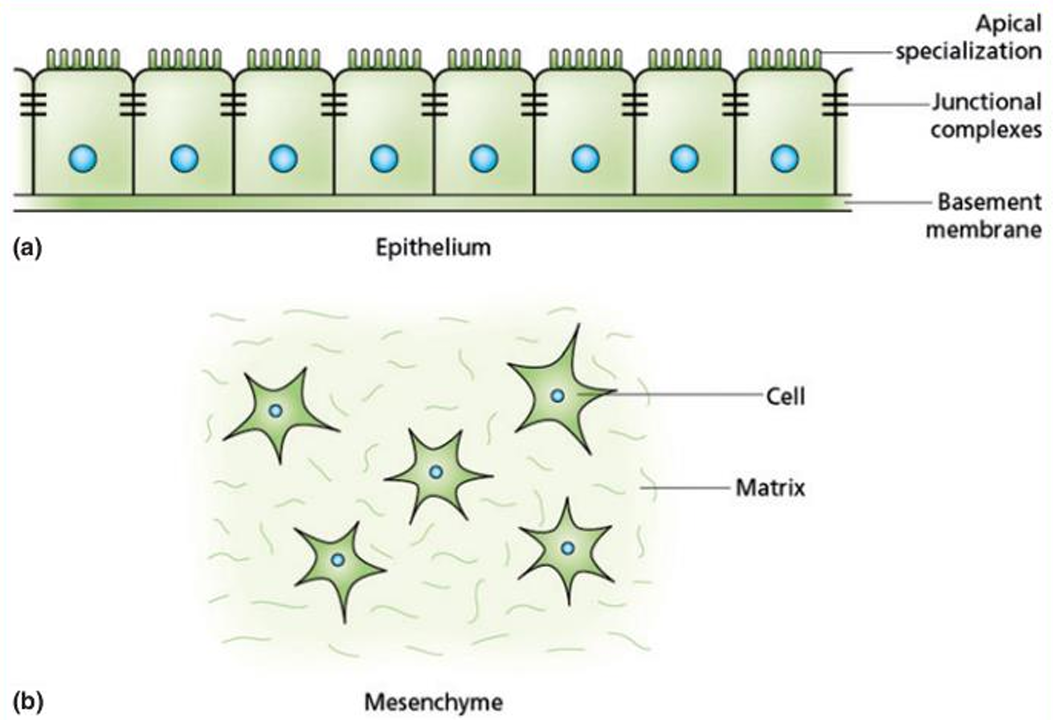
- epithelium
- An epithelium is a sheet of cells, arranged on a basement membrane
- each cell joined to its neighbors by specialized junctions and showing a distinct apicalbasal polarity
每个细胞通过特殊的连接与邻近细胞连接,并显示出独特的顶基底极性
- mesenchyme
- Mesenchyme is a descriptive term for scattered松散的 stellate cells embedded in loose extracellular matrix.
- It fills up much of the embryo and later forms fibroblasts, adipose tissue, smooth muscle, and skeletal tissues.
- morphogenesis 形态发生
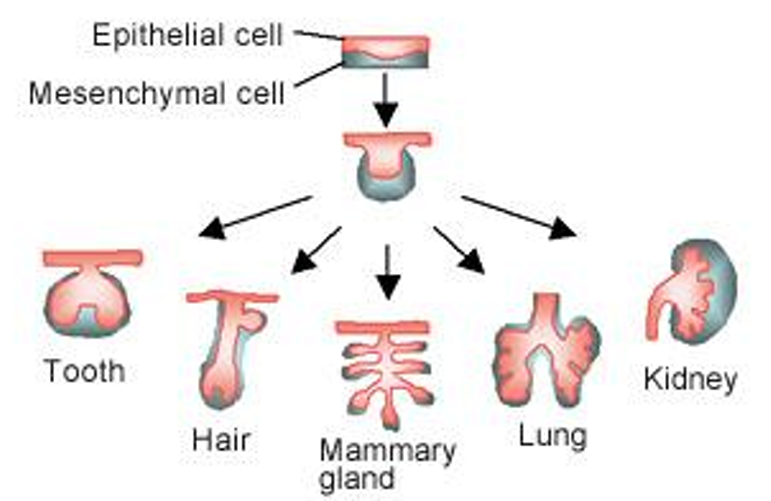
Mesenchymal-epithelial interaction- Almost all fetal organs develop from the organ germs, induced by epithelial and mesenchymal stem cells
几乎所有胎儿器官都由器官原基发育而来,而器官原基是由上皮干细胞和间充质干细胞诱导形成的 - The development of the organ germs is regulated by epithelial-mesenchymal interactions
器官原基的发育受上皮 - 间充质相互作用调控 - 图
- Almost all fetal organs develop from the organ germs, induced by epithelial and mesenchymal stem cells
- Germ layers
- Endoderm 内胚层
- forms the stomach, the colon, the liver, the pancreas, the urinary bladder, the epithelial parts of trachea, the lungs, the pharynx, the thyroid, the parathyroid, and the intestines
- 形成胃、结肠、肝脏、胰腺、膀胱、气管上皮、肺、咽、甲状腺、甲状旁腺及肠道
- Mesoderm 中胚层
- aids in the production of cardiac muscle, skeletal muscle, cartilage, kidneys, heart, spleen, and red blood cells.
- 参与形成心肌、骨骼肌、软骨、肾脏、心脏、脾脏及红细胞
- Ectoderm 外胚层
- forms epidermis, hair, nails, lens of the eye, peripheral nervous system brain, spinal cord, posterior pituitary, motor neurons, retina.
- 形成表皮、毛发、指甲、晶状体、周围神经系统、脑、脊髓、神经垂体、运动神经元、视网膜
- 胚胎发育
- Endoderm 内胚层
- General principles
- Cell division
- Stem cells
- defined by two properties
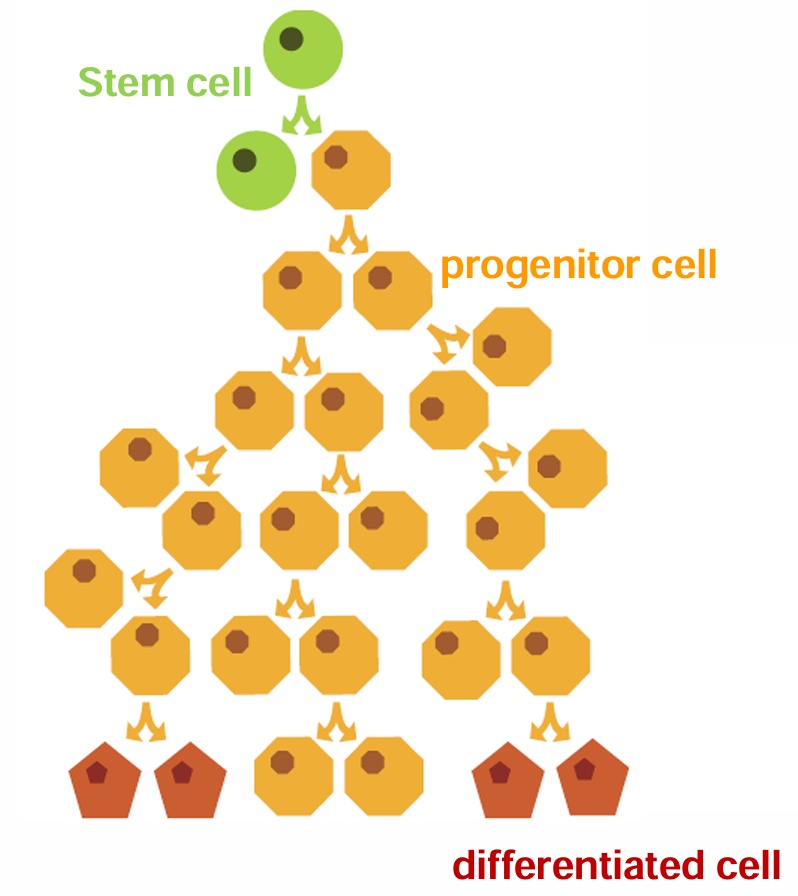
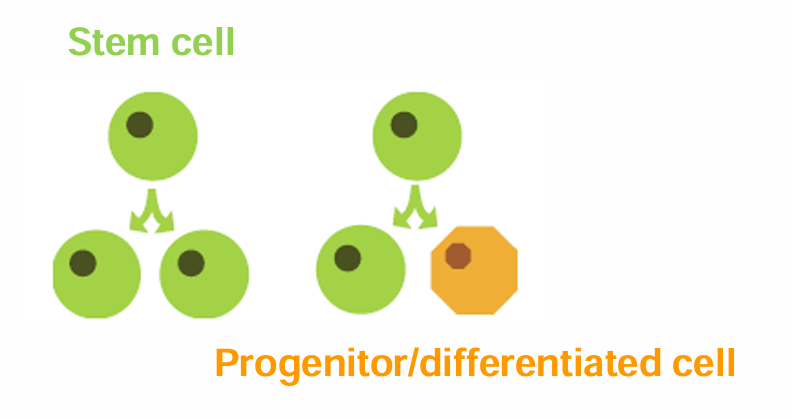
- self renewal, the ability to make identical copies of themselves
- differentiation, the ability to form other cell types of the body
- asymmetric cell division
- in bone marrow only an estimated 1 in 10,000 to 15,000 cells is considered to be a stem cell
- The progenitor cells 祖细胞 can divide many times, ultimately giving rise to thousands of fully differentiated cells that have originated from one stem cell division
- Mechanisms of asymmetric division
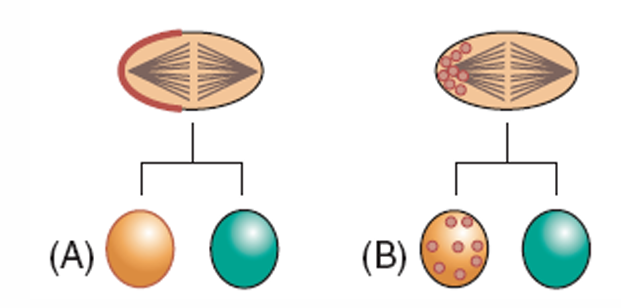
- Intrinsic mechanisms
- asymmetric partitioning of cell components
- such as cell polarity factors or cell fate determinants (A, B)
- Extrinsic mechanism
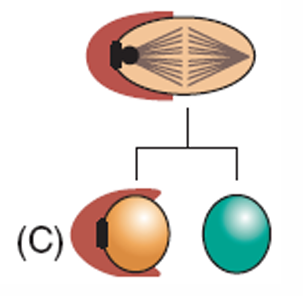
- the two daughter cells are positioned asymmetrically in their environment and receive different external signals (C)
- the two daughter cells are positioned asymmetrically in their environment and receive different external signals (C)
- Intrinsic mechanisms
- Dedifferentiation, redifferentiation
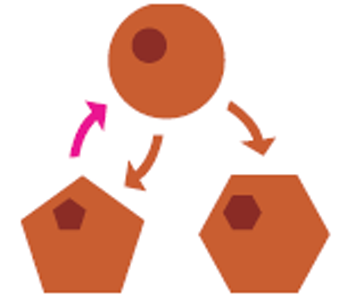
- a differentiated cell dedifferentiates (pink arrow), and redifferentiates (brown arrows) into the same phenotype表型 (五边形) or a different phenotype表型 (六边形)
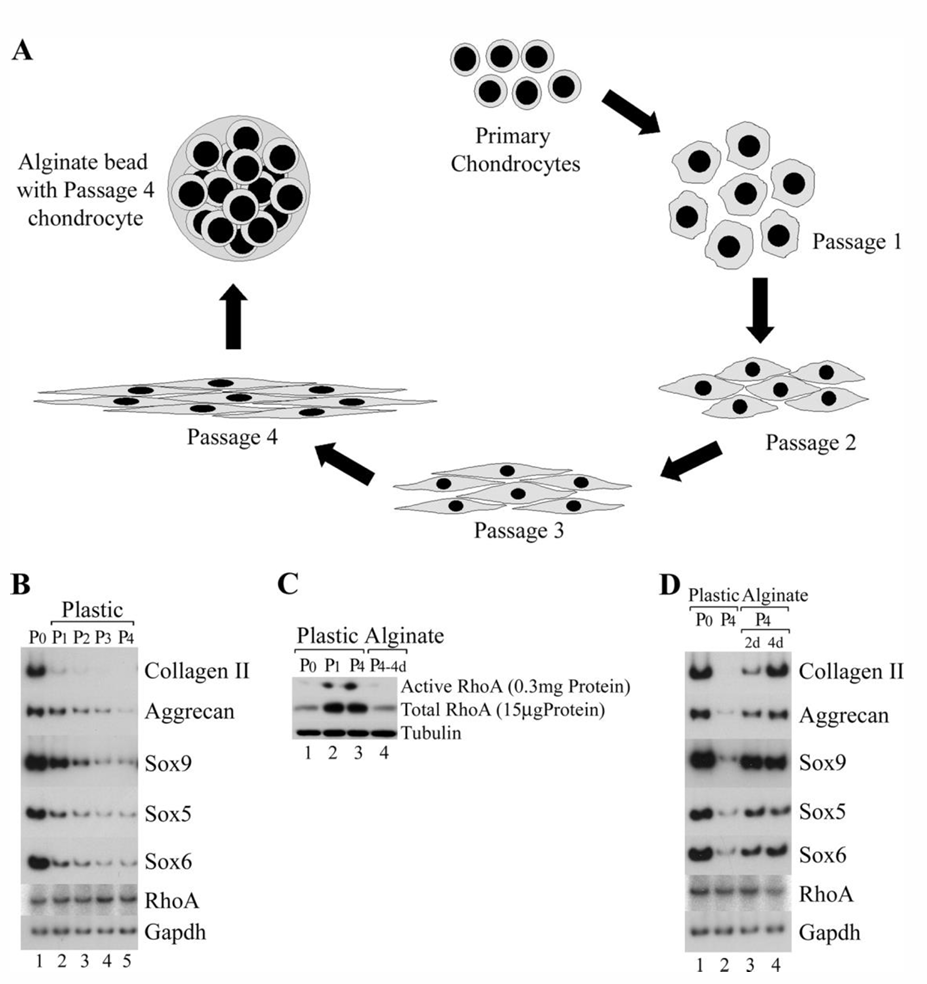
- 例子 - Chondrocytes 软骨细胞
- dedifferentiation
- During expansion in vitro 体外扩增, several cell types change their phenotype表型 towards fibroblast like cells成纤维细胞样细胞 and start to express primitive原始 embryonic胚胎 markers标志物
成纤维细胞样细胞呈长梭形或纺锤形,细胞质伸展、细胞核居中 - The degree of dedifferentiation has been correlated to the number of cell divisions or passages
去分化的程度与细胞分裂次数或传代数相关 - Chondrocytes culture on 2D culture dishes lose their chondrocyte characteristics (phenotype)
在二维培养皿中培养的软骨细胞会失去其软骨细胞特性(表型)
- During expansion in vitro 体外扩增, several cell types change their phenotype表型 towards fibroblast like cells成纤维细胞样细胞 and start to express primitive原始 embryonic胚胎 markers标志物
- redifferentiation
- Once culture in 3D scaffold, dedifferentiated chondrocytes regain chondrogenic phenotype
- 一旦在三维支架中培养,去分化的软骨细胞会重新获得软骨形成表型
- 图
- dedifferentiation
- a differentiated cell dedifferentiates (pink arrow), and redifferentiates (brown arrows) into the same phenotype表型 (五边形) or a different phenotype表型 (六边形)
- Transdifferentiation
- a differentiated cells transdifferentiates (blue arrow) into another differentiated phenotype, sometimes via an intermediate cell type (circle)
- a differentiated cells transdifferentiates (blue arrow) into another differentiated phenotype, sometimes via an intermediate cell type (circle)
- asymmetric cell division
- 图
- 分为2类
- embryonic stem cells 胚胎干细胞
- embryonic and fetal development and growth
- 胚胎和胎儿的发育和生长
- adult somatic stem cells 成体干细胞
- growth, tissue maintenance and regeneration and repair of diseased or damaged tissue
- 生长、组织维持、再生,以及病变或受损组织的修复
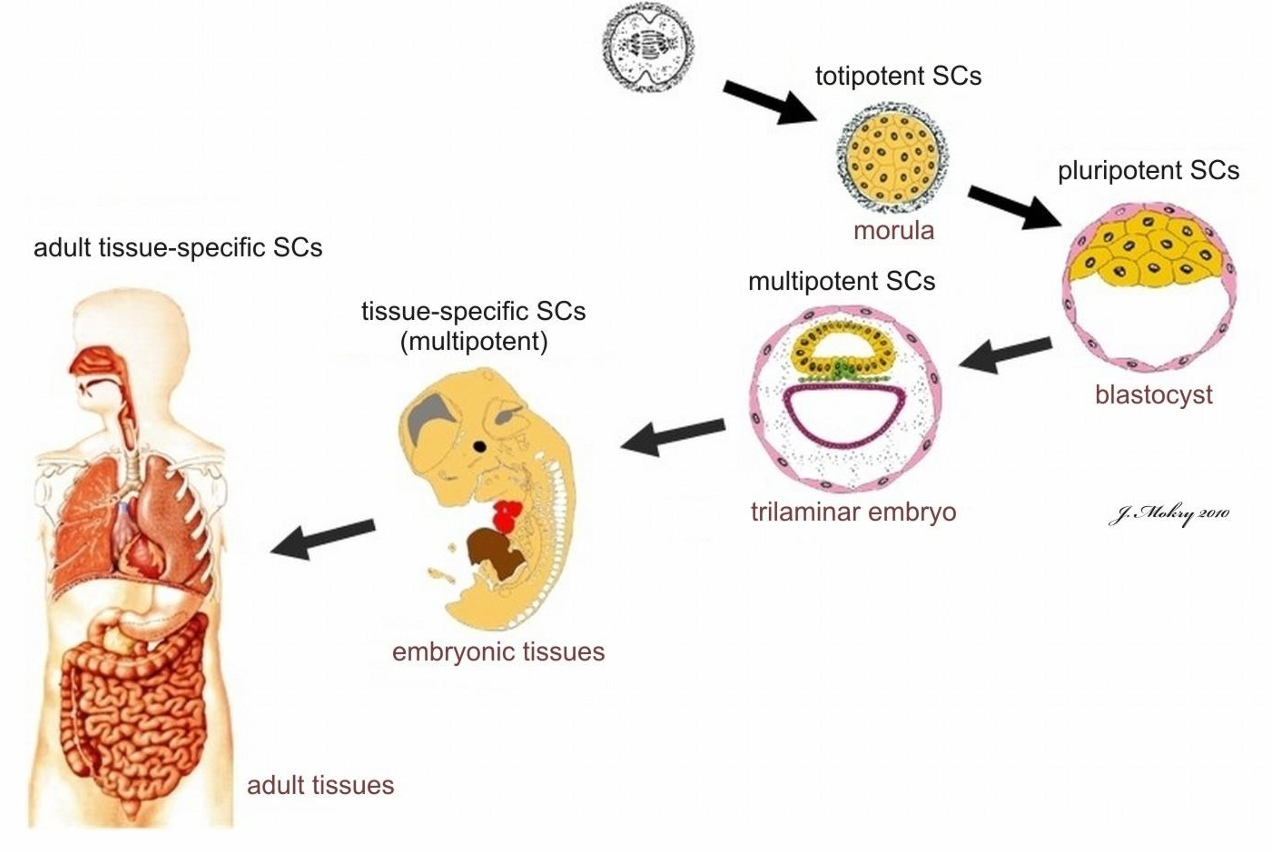
- embryonic stem cells 胚胎干细胞
- 根据能力命名
- Totipotent stem cells 全能干细胞
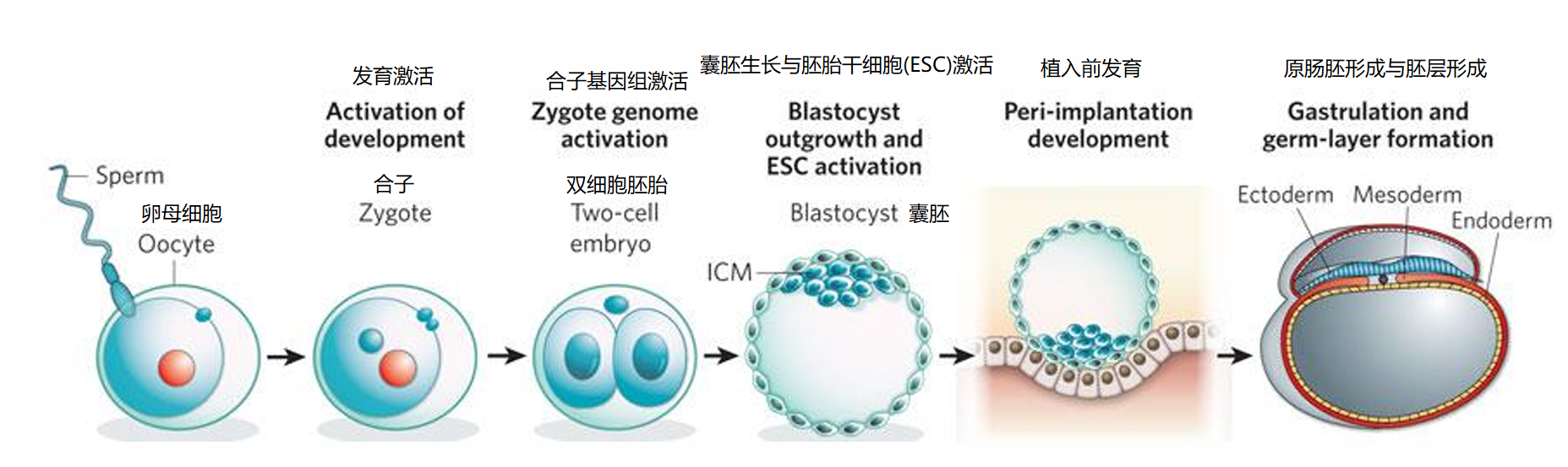
- have the ability to form an entire organism
具有形成完整个体的能力 - The fertilized oocyte and the cells after the first cleavage divisions
受精卵及第一次卵裂后的细胞属于全能干细胞
- have the ability to form an entire organism
- Pluripotent stem cells 多能干细胞
- are able to form all three germ layers including germ cells, but not the extra-embryonic tissue as placenta and umbilical cord.
能够形成三个胚层的所有细胞(包括生殖细胞),但不能形成胎盘、脐带等胚胎外组织 - Cells of the inner cell mass of the blastocyst are pluripotent, embryonic stem cells.
囊胚内细胞团的细胞为多能干细胞,即胚胎干细胞
- are able to form all three germ layers including germ cells, but not the extra-embryonic tissue as placenta and umbilical cord.
- Multipotent stem cells 多潜能干细胞
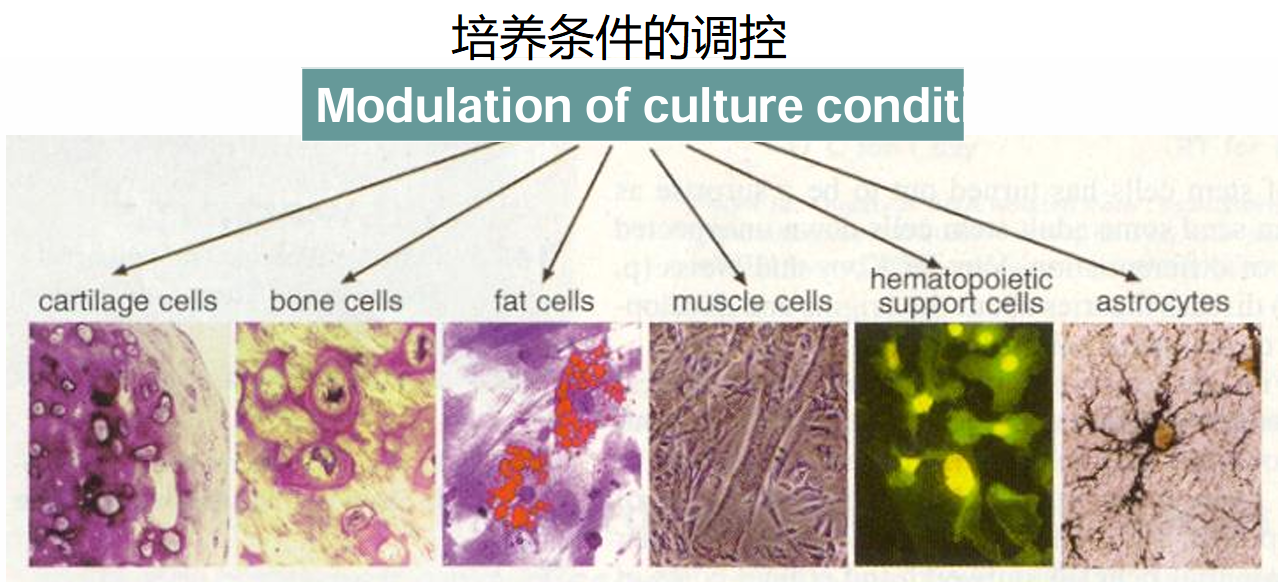
- able to form multiple cell types
能形成多种细胞类型 - 比如 Mesenchymal stem cells间充质干细胞
- multipotentcells isolated from bone marrow
- Capable of differentiating into a few type of cells but not any type of cells
- The potency of mesenchymal stem cells
- able to form multiple cell types
- 图
- Totipotent stem cells 全能干细胞
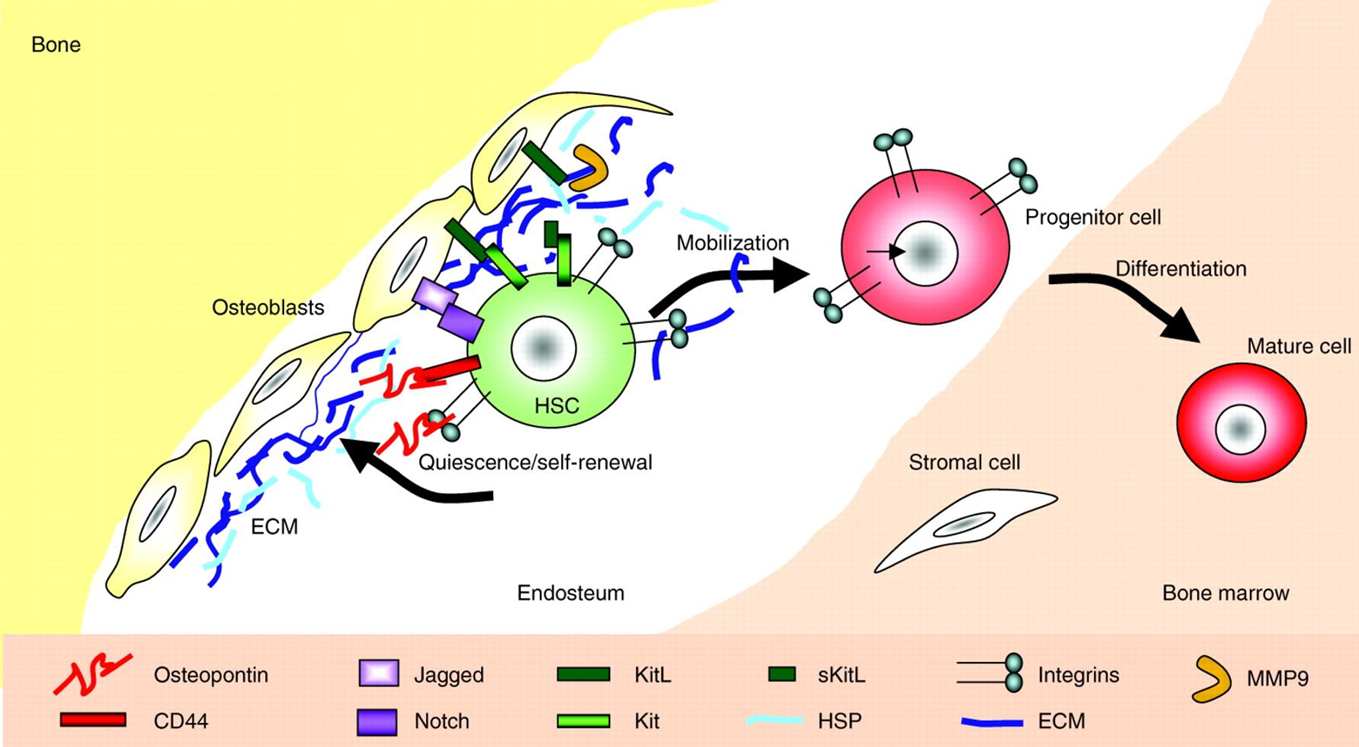
- niches 微环境
- 干细胞的微环境可以让干细胞在里面一直生活保持表型, 引导分化的后代出去
- microenvironment that provides a sheltering environment for the stem cells, in which the balance between stem cell quiescence and activity is maintained
能维持干细胞静息状态与活性之间的平衡 - Stem cells reside in the niche for an indefinite period of time while self-renewing and producing differentiated progeny.
干细胞可长期定居于该微环境中,同时进行自我更新并产生分化后代细胞 - The balanced interaction between the stem cell, the niche cells, the extracellular matrices and secreted factors ensures the maintenance of the stem cell phenotype, and guides a differentiating daughter away from the niche
干细胞、微环境细胞、细胞外基质及分泌因子之间的平衡互作,既能维持干细胞表型,又能引导分化的子细胞脱离该微环境 - 图例
- Implications应用 in tissue engineering
- How to keep cells in the desired state by providing the correct substrate基质 and medium培养基
- How to create an engineered tissue containing two or more cell types of different origins that can sustain one another
- How to provide a vascular system capable of delivering nutrients and removing waste products
- How to control cell differentiation
- Replicative senescence 复制性衰老
- 成体干细胞只能复制50-70次, 胚胎干细胞端粒酶活性高可以无限复制, 可以恢复端粒酶活性让细胞恢复无限复制
- Adult stem cell like mesenchymal间充质 stem cells and other differentiated cells have a limited life span.
- After 50–70 cell divisions the cell cannot divide anymore (replicative senescence)
- This a limitation of adult stem cell in tissue engineering application
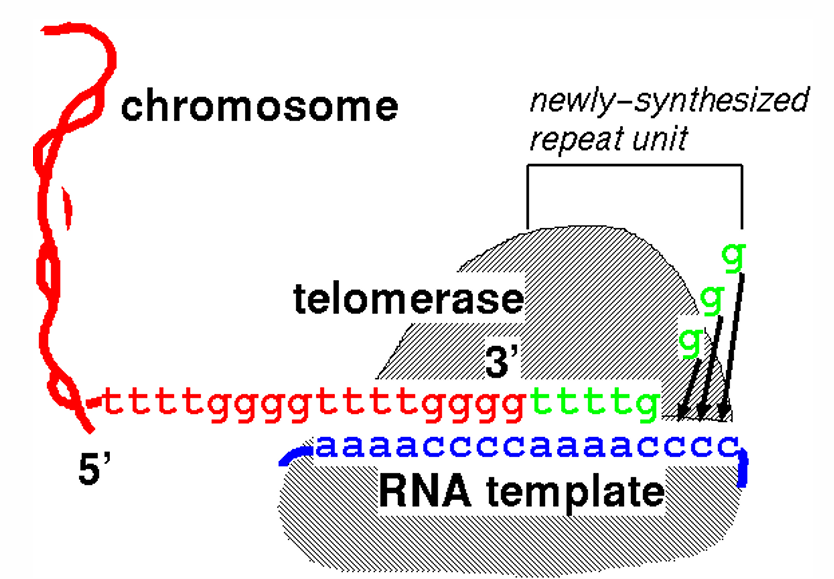
- One of the major causes of senescence is progressive telomere shortening after each cell division
- Embryonic胚胎 stem cells express high levels of telomerase端粒酶, which adds telomeric repeats to the chromosome ends, thus protecting the shortening of the chromosomes, therefore can divide indefinitely.
- Cells can also be immortalized by restoring telomerase activity
- defined by two properties
- Epigenetics 表观遗传学
- 定义
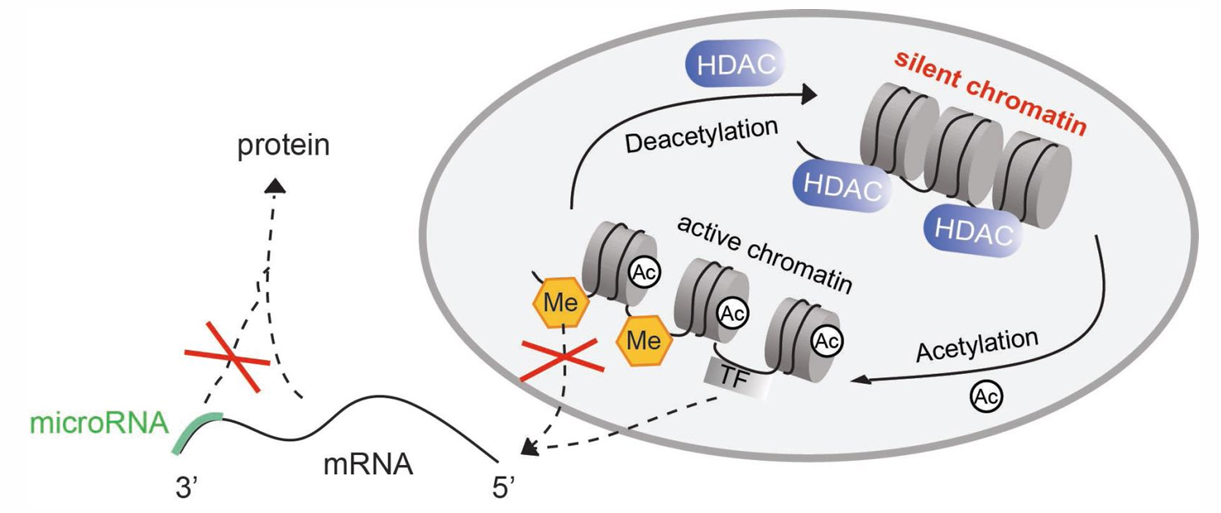
- functionally relevant modifications to the genome that do not involve a change in the nucleotide sequence
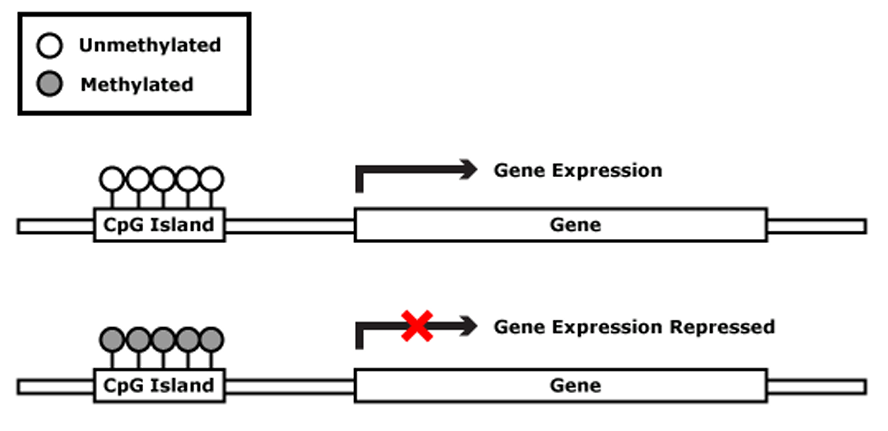
- DNA methylation
- Typically occurs at sites of CpG (cytosine-phosphate guanine)
- interferes with the binding of transcriptional machinery
- Histone modification
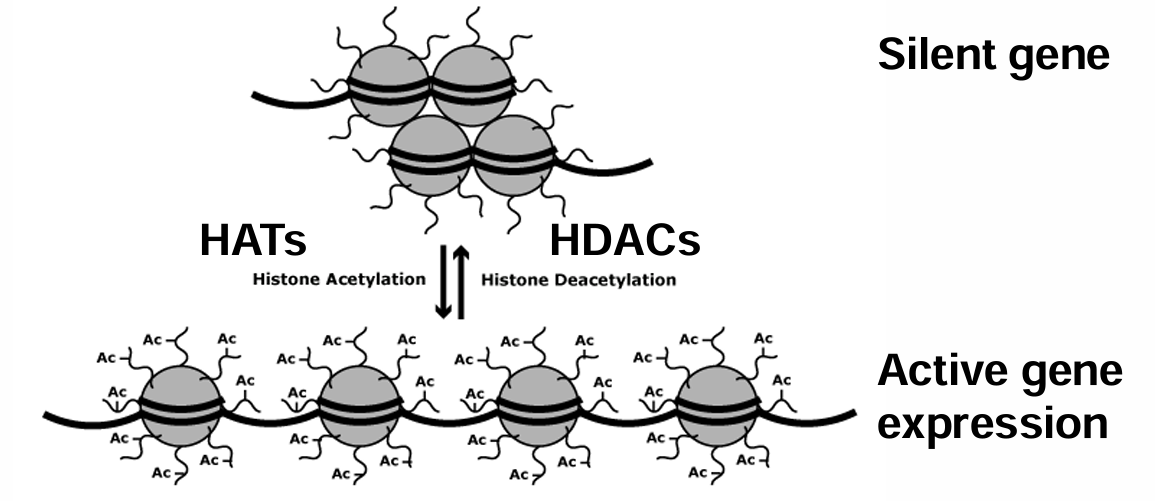
- Histone deactylases 组蛋白去乙酰化酶 (HDACs) keep the chromatin in tightly folded form, no gene transcription
- Histone acetyl transferases 组蛋白乙酰转移酶 (HATs) decrease the association of the histone with the DNA strand allowing the access of transcription factors
- 一个让染色体紧密折叠,一个让染色体松散
- MicroRNA (miRNA)
- a small non-coding RNA molecule that function via base-pairing with complementary sequences within mRNA molecules
- usually resulting in gene silencing via translational repression or target degradation
通常通过翻译抑制或靶标降解的方式,最终导致基因沉默 - 图
- 定义
- Cell culture 细胞培养
- harvest/retrieval 采集
- Optimal harvest methods differ depending on the cell source and cell type
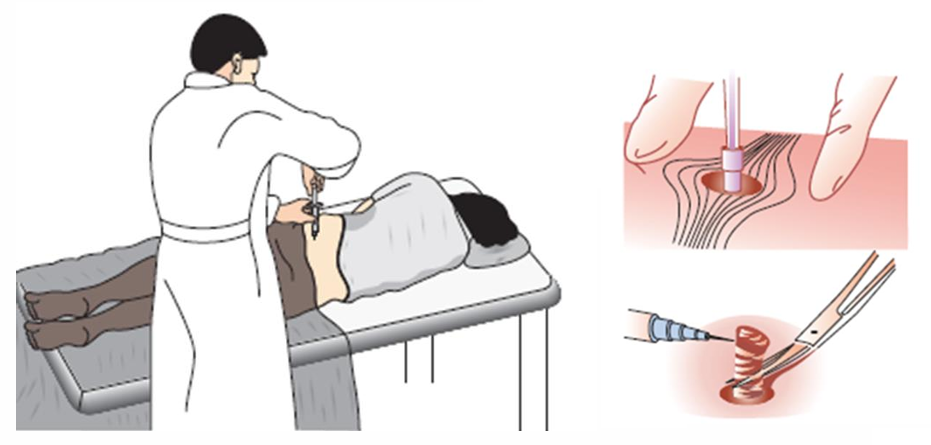
最适方法根据细胞类型确定 - Bone marrow aspiration
- harvested under local anesthesia from the upper part of the hip (the iliac crest) with a needle and a heparinized (preventblood coagulation) syringe注射器
- 在局部麻醉下,用针头和肝素化(防凝血)注射器从髋部上方(髂嵴)采集
- 图
- 抽取后需要Plating the aspirate, adherent cells are retained
- 抽取后需要接种抽吸物,保留贴壁细胞
- Tissue biopsies 组织活检
- 类别
- Skin
- Cartilage
- Bone
- Ligaments/tendons
- 活检后需要Dissociation of the cells from ECM
- Mechanical agitation, fat tissues
机械搅拌法, 适用于脂肪组织等 - Enzymatic digestion, maybe multiple digestions, bone, cartilage etc
酶消化法, 可能需要多次消化, 适用于骨、软骨等组织
- Mechanical agitation, fat tissues
- 类别
- Optimal harvest methods differ depending on the cell source and cell type
- selection 选择
- 识别 Identification
- The isolation of stem cells generally results in a heterogeneous异质性 population of cells
- 干细胞分离时候会有一堆不同的细胞混在一起
- Combinations of several cell surface markers, or the absence of other markers allows researchers to enrich or purify the population
- 通常一种细胞会表现好几种markers标志物, 因此我们可以通过几种存在标志物的组合与其他标志物的不存在的组合来判断是否提纯成功
- Many of these markers are CD molecules (Cluster of Differentiation分化簇)
- 分化簇就是 CD, 是对细胞表面一类特征性蛋白的统一命名体系
- Hematopoietic stem cell造血干细胞 - CD34+, CD45+, CD59+, CD90+, CD38-, CD14+
- Mesenchymal stem cell间充质干细胞 - STRO-1+, CD73+, CD90+, CD44+, CD105+, CD45-, CD34-, CD14
- 纯化 Selection 手段
- Pre-plating 预铺板法
- 核心就是板子上铺了一层特异黏附的分子, 能黏上去的就是一类细胞
- Plating mixture of primary isolated cells onto plastic dishes and at given time intervals remove the non-adhering cells, a purified stem cell population can be isolated
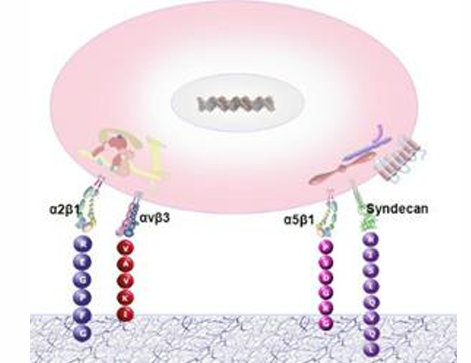
将原代分离的细胞混合物接种到塑料培养皿中,按特定时间间隔移除未贴壁细胞,即可分离获得纯化的干细胞群 - Plating on coated culture surface, like fibronectin coated, cells that can attach to fibronectin are retained
接种到包被后的培养表面, 如纤连蛋白包被表面, 能附着于纤连蛋白的细胞会被保留
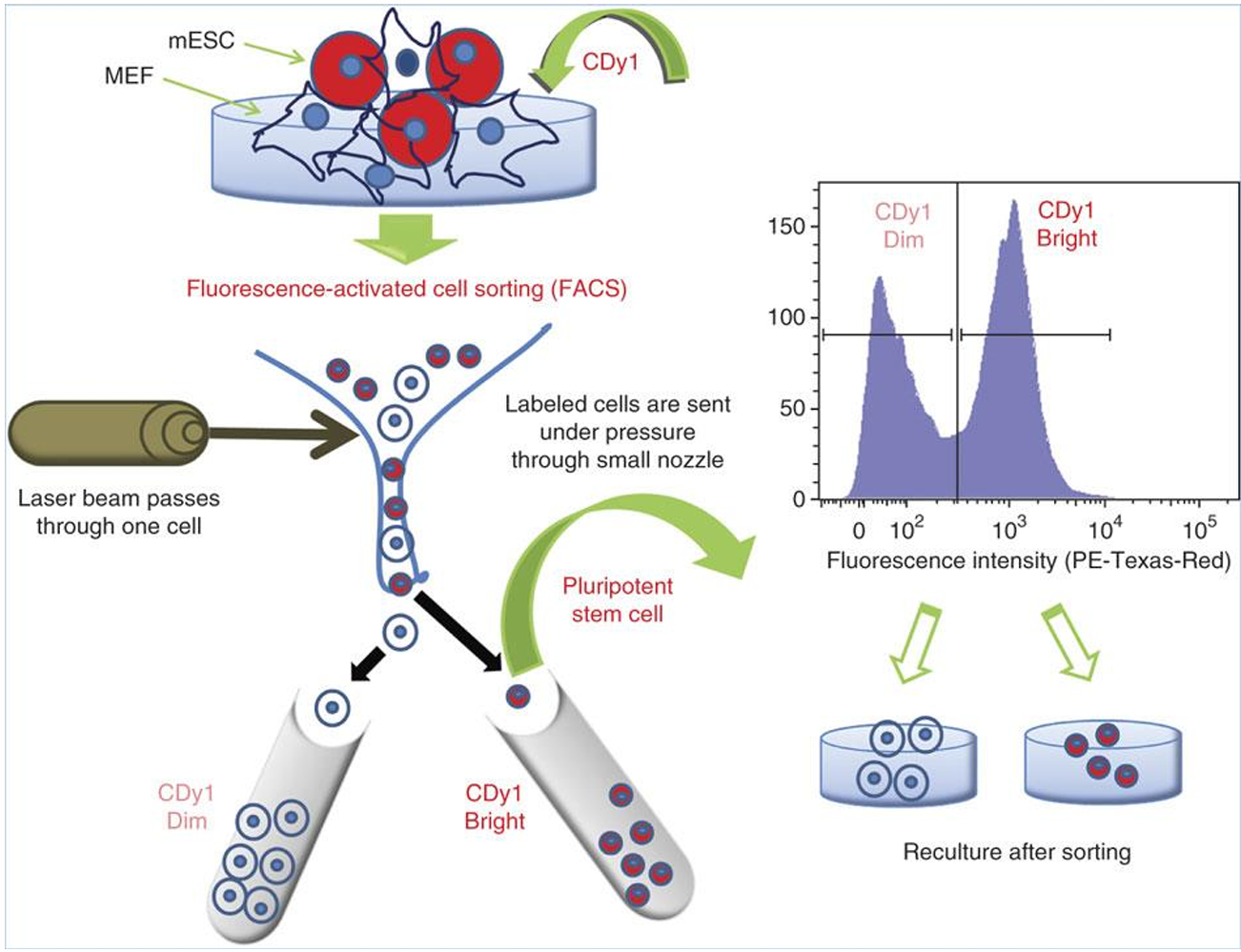
- Fluorescence activated cell sorting (FACS) 荧光激活细胞分选技术
- a fluorescent dye is coupled to an antibody of interest
将荧光染料偶联到目标抗体上 - If the antibody can bind to the cells, the cells can be separated in an electronic fluorescence activated cell sorter
若该抗体能与细胞结合,这些细胞便可通过电子荧光激活细胞分选仪分离出来 - 电子荧光激活细胞分选仪让细胞一个一个走, 看到有/无荧光后可以给细胞充电, 然后再电场中分离细胞
- a fluorescent dye is coupled to an antibody of interest
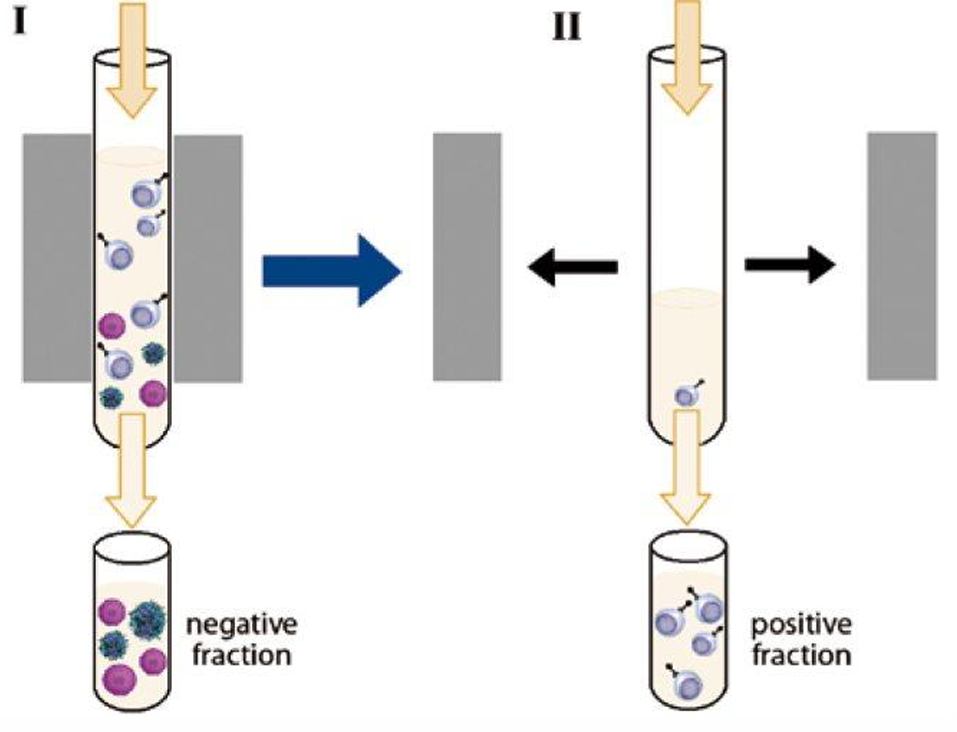
- Magnetic activated cell sorting (MACS) 磁激活细胞分选技术
- Cells become magnetic after being labeled with antibodies to which small magnetic beads are coupled
用偶联了磁性微珠的抗体标记细胞后,细胞会具有磁性 - The magnetic cells, are then separated from the negative cells by exposure to a magnetic field
随后将细胞置于磁场中,即可将磁性细胞与非磁性细胞分离 - 抗体有磁性
- Cells become magnetic after being labeled with antibodies to which small magnetic beads are coupled
- Pre-plating 预铺板法
- 识别 Identification
- expansion 增殖
- basic
- Because a high number of cells are needed for most TE, it is common for the cells to be expanded in vitro (in glass) before clinical use.
由于大多数组织工程需要大量细胞,临床应用前通常会在体外(玻璃器皿中)进行细胞扩增 - The expansion is normally made in tissue culture vessels
细胞扩增通常在组织培养容器中进行 - need a culture medium supplemented with growth factors, serum and other specific additives
培养体系需添加含生长因子、血清及其他特定添加剂的培养基 - anchor dependent cells 贴壁依赖型细胞
- The typical典型 cell types which are expanded in monolayer单层 are anchor dependent cells, i.e. cells that must adhere to a surface before they start to proliferate增殖
单层培养中扩增的典型细胞类型是贴壁依赖型细胞,这类细胞必须先附着于表面才能开始增殖 - Most of cells in our body, especially in musculoskeletal tissues, like fibroblasts, skeletal myocytes, chondrocytes, etc. are anchor dependent cells.
人体中的大多数细胞,尤其是肌肉骨骼组织中的细胞(如成纤维细胞、骨骼肌细胞、软骨细胞等),均为贴壁依赖型细胞
- The typical典型 cell types which are expanded in monolayer单层 are anchor dependent cells, i.e. cells that must adhere to a surface before they start to proliferate增殖
- Because a high number of cells are needed for most TE, it is common for the cells to be expanded in vitro (in glass) before clinical use.
- surface 培养皿表面
- 核心是处理表面更容易吸水并于蛋白结合让细胞黏附, 有时候需要添加ECM的蛋白
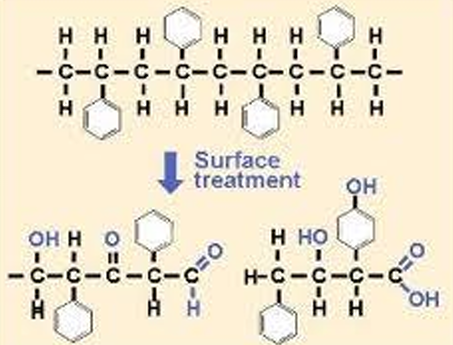
- Tissue culture plastics组织培养塑料 (polystyrene) are treated to create the surface roughness粗糙度 and hydrophilicity亲水性 that is necessary for protein adsorption吸附 and cell attachment
- By this treatment, the water-contact angle decreases which gives to higher wettability湿润性 of the surface.
- Higher wettability leads to increased adherence and spreading which results in increased cell proliferation
更高的润湿性能增强细胞的黏附与铺展,进而促进细胞增殖 - For some cell types, it is necessary to increase the ability of cell binding to the surface by applying coatings of ECM proteins such as collagen胶原蛋白, laminin层粘连蛋白 or fibronectin纤连蛋白
- medium 培养基
- 渗透压要与细胞相同, 缓冲体系控制pH, 多种必要的营养
- the medium must match the osmolarity of the cell interior, otherwise cells will swell or shrink due to osmotic pressure difference
- Mammalian哺乳动物 cell media generally have a total osmolarity about 350 mOsm.
- The pH needs to be tightly controlled, usually 7.4 is normal.
- The pH control is typically achieved with bicarbonate碳酸氢盐-CO2 buffers
2.2 gm/L bicarbonate碳酸氢盐 and 5% CO2 being a common combination - Most of media contain phenol red酚红, a pH indicator
- components
- salts
- amino acids
- sugars
- low levels of specific hormones and growth factors
- The requirement for hormones and growth factors is usually met by including some animal serum血清, often 10% fetal bovine serum (FBS) 胎牛血清
- disadvantages
- Serum can never be completely characterized, and there are often differences between batches of serum, which can be critical for experimental results.
成分每批次不一样 - For culture of cells intended for implantation into human patients, presence of animal serum could potentially transmit animal diseases to patients
可能带有动物疾病
- Serum can never be completely characterized, and there are often differences between batches of serum, which can be critical for experimental results.
- subculture 传代培养
- 细胞太密了需要传代然后更换培养基
- 图
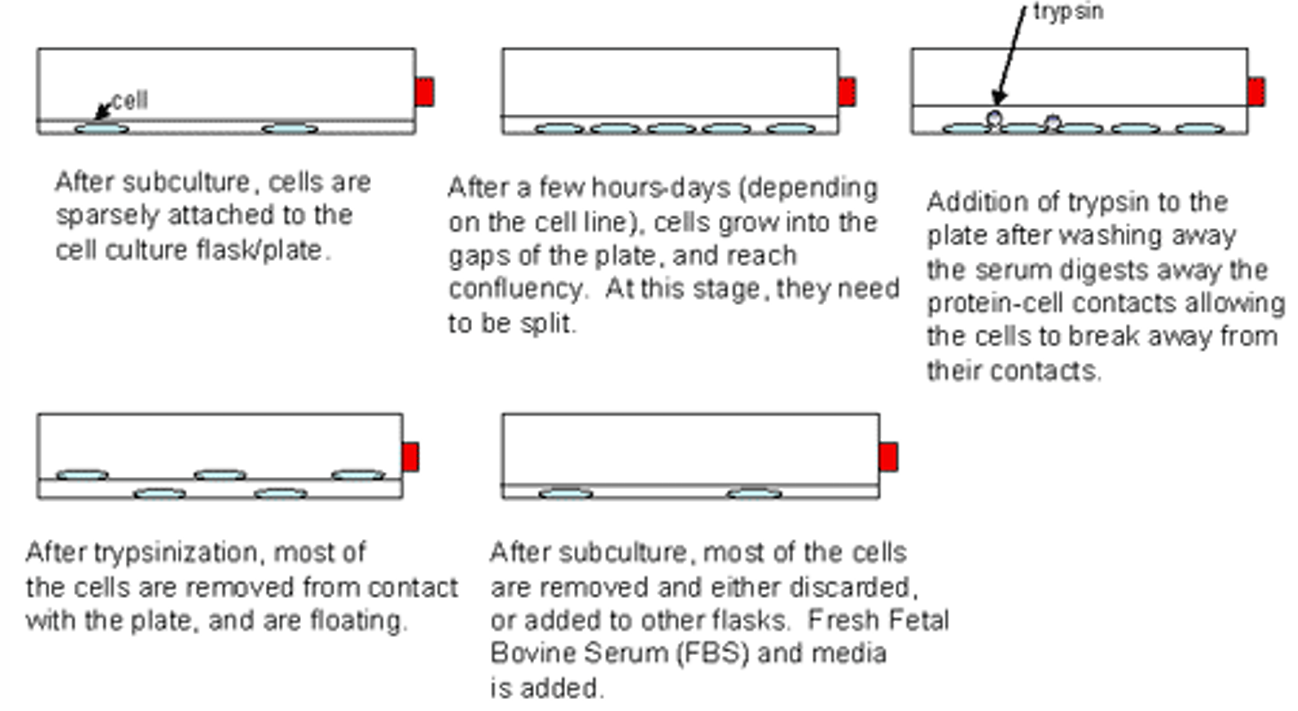
- Cells need to have their medium renewed regularly and to be subcultured and replated重新接种 at lower density whenever they approach confluence汇集, which means covering all the available surface in culture flasks.
- Subculturing is usually carried out by treatment with the enzyme trypsin胰蛋白酶, which degrades much of the extracellular and cell surface protein and makes the cells drop off the substrate
- the cells can be transferred at lower density into new flasks.
- The cells take an hour or two to resynthesize重新合成 their surface molecules, and they can then adhere to the new substrate and carry on growing
- feeder cells 饲养层细胞
- 饲养层细胞先生长创造优质环境后在上面再接种
- In many organs, different cell types function side by side as a team by helping and supporting each other.
- A rapidly growing cell line (so-called ‘feeder cells ’, like fibroblasts成纤维细胞) are grown on culture dishes培养皿 first, then arresting终止 their growth when the dishes reach the desired confluence汇合度.
- The desired slowly growing cells are then seeded on top of the growth-arrested feeder cell monolayer to develop into colonies集落
- The functions of the feeder cells are to detoxify解毒, process nutrients, activate, deactivate hormones, growth factors and provide a supporting cell matrix支持性细胞基质
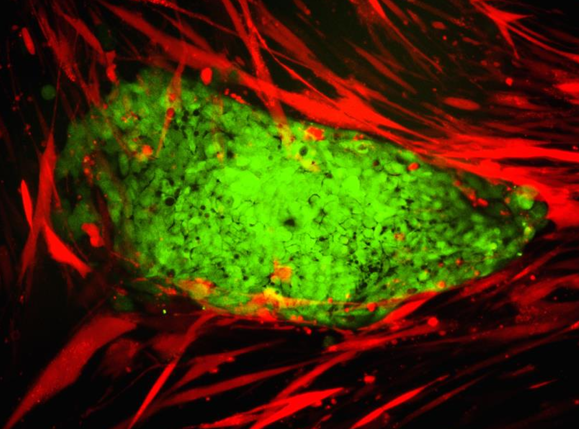
- many cell types could not expand without the use of feeder cells, such as human embryonic胚胎 stem cells (ES)
- ESC, embryonic stem cells, grown on a feeder layer of fibroblasts
- basic
- Cryopreservation 冷冻保存
- 通常在77k保存细胞, 需要cryoprotectant solution 来在低温时保护细胞减少冰晶的损伤
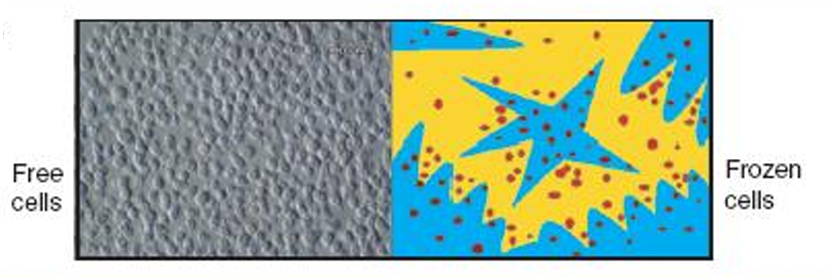
- Cryopreservation is a process where cells or whole tissues are preserved by cooling to sub-zero temperatures, typically 77 K (= −196 °C, the boiling point of liquid nitrogen).
- At these cold temperatures, any biological activity, including the biochemical reactions that would cause cell death, is effectively stopped.
- Cryoprotectant solutions冷冻保护剂溶液 is needed to prevent damage to cells due to freezing during the cooling
- Increasing salt concentration in the cells as water is drawn into extracellular ice formation
随着水分被吸到细胞外形成冰晶,细胞内的盐浓度会升高 - Lowering in the freezing point of the solution, which decreases with increasing concentration of cryoprotectant.
溶液的凝固点会降低,且冷冻保护剂浓度越高,凝固点越低 - At high concentration help to minimize damage from ice crystals by encouraging glass formation rather than ice crystallization.
高浓度下,冷冻保护剂会促进玻璃化形成而非冰晶结晶,从而最大限度减少冰晶造成的损伤 - Form hydrogen bonds with water molecules thereby minimizing/preventing water-to-water hydrogen bonding that is the basis of ice formation.
它能与水分子形成氢键,进而减少或阻止水分子间氢键的形成 —— 而水分子间的氢键正是冰晶形成的基础 - 图例
- Uncontrolled freezing leads to cell death due to ice crystal volume expansion
- Controlled slow cooling with cryoprotectant minimizes cell death during freezing

添加冷冻保护剂后进行可控慢速降温,能最大限度减少冷冻过程中的细胞死亡
- Uncontrolled freezing leads to cell death due to ice crystal volume expansion
- Increasing salt concentration in the cells as water is drawn into extracellular ice formation
- differentiation
- Expansion vs. differentiation
- Expansion phase
- high cell proliferation, low protein production by cells
- Differentiation
- the cells slow down or stop their cell division and mature into a functional protein synthesizing phenotype表型
- Expansion phase
- in vitro the differentiation is accomplished by
- Eliminating or lowering the serum concentration (reduce proliferation driving growth factors from serum)
- Culturing the cells in a 3D environment (restoring cell native morphology形态学 and environment)
- Soluble and insoluble factors, like growth factors, ECM molecules
- Mechanical signals
- Expansion vs. differentiation
- harvest/retrieval 采集

All articles in this blog are licensed under CC BY-NC-SA 4.0 unless stating additionally.